Service FileDossier de Service
- Honour RollTableau d’Honneur #50
- BornNé 1909, Fort Saskatchewan, Alberta
- EngagedEngagé March 9, 19289 mars 1928
- DivisionsDivisions Saskatchewan and ManitobaSaskatchewan et Manitoba
- PostedAffecté Port Nelson Detachment, ManitobaDétachement de Port Nelson, Manitoba
- DiedDécédé April 19, 1931 — Fourteen Mile River, near Port Nelson, Manitoba19 avril 1931 — Rivière Fourteen Mile, près de Port Nelson, Manitoba
- AgeÂge 22 years22 ans
- CauseCause Drowned on dog team patrol during sudden spring thawNoyé en patrouille en traîneau à chiens lors d’un dégel printanier soudain
- WithAvec Spl/Cst. Norman Massan, Honour Roll #200 (also drowned)Gend. spéc. Norman Massan, Tableau d’Honneur #200 (également noyé)
- Found byRetrouvé par Reg.#6737, Sgt. John Molloy on April 27, 1931Sgt. John Molloy, Reg.#6737, le 27 avril 1931
- TrainedFormé "Depot" Division, Regina, SaskatchewanQuartier général de la GRC, Regina, Saskatchewan
- BuriedInhumé Saint Joachim Cemetery, Edmonton, AB — Section 1Cimetière Saint-Joachim, Edmonton, AB — Section 1
- MemorialMémorial MacDonell Drive, "Depot" Division, Regina, SKAvenue MacDonell, Division Dépôt, Regina, SK
- FatherPère NWMP veteran; served in the Yukon during the gold rushVétéran de la NWMP; a servi au Yukon pendant la ruée vers l’or
Rising Water and Its Victims
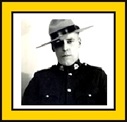
Constable Donald Ross MacDonell
Reg.#10399 · 1909–1931
The ice had been groaning for days, speaking in the only language the Canadian north knows — slow, deep, restless and final…
Constable Donald Ross MacDonell knew that sound well enough — he had grown up hearing his father talk about the north, about its dangers, its moods and its warnings, about the way the land itself spoke to those patient enough to listen. His father had mushed through the Yukon during the gold rush, had earned a reputation that followed the MacDonell name like a shadow. Donald had grown up in Fort Saskatchewan, east of Edmonton, breathing the particular air of a mounted police post — the smell of horses and leather and absolute duty. It had never occurred to him to want anything else.
He engaged in the RCMP on March 9, 1928, and was posted to Saskatchewan and then Manitoba. Like many a young constable before him, he did not entirely escape the attention of Service Court. On July 21, 1928, he found himself before O.123, Assistant Commissioner G. S. Worsley, charged with negligence. He was fined two dollars. It is the kind of detail that brings a man back to life — the minor transgression, the modest fine, the lesson absorbed and moved on from. He was still finding his feet, still becoming the Mountie his father had shown him how to be.
By April 1931 he was posted to Port Nelson Detachment in the remote lowlands of northern Manitoba, three hundred and fifty miles northwest of The Pas, near the mouth of the great Nelson River. He was twenty-two years old and he had earned, by all accounts, the quiet respect of those around him.
On April 18, 1931, Constable MacDonell set out on a dog team patrol with Special Constable Norman Massan — Honour Roll Number 200 — a man who knew this country as well as anyone alive. They made camp for the night on a small island at the mouth of Fourteen Mile River. It seemed a reasonable place to stop. It would not remain so.
During the night, a sudden thaw set in. Water began to flow over the ice, threatening to flood the island entirely. Leaving their dogs and their equipment behind, the two men began to wade toward the main shore and higher ground. What happened next, we do not know exactly. The north kept its own counsel that dreadful night.
The first sign of trouble came a few days later, when some of their dogs found their own way back to Port Nelson — arriving without their handlers, without explanation, carrying only the weight of what they implied. It fell to Reg.#6737, Sergeant John Molloy to go out and search for the men. On April 27, 1931, he found the body of Norman Massan. A few days after that, he found Donald MacDonell. Both men were frozen beneath newly formed ice.
The news reached the outside world slowly, as news from that country always did. By May 4th it had been wired down to RCMP officials at mile 356 on the Hudson Bay Railway, and from there to The Pas, and from there to the rest of Canada. In Fort Saskatchewan, a family waited for word that was already two weeks old before it arrived.
At the time of his death, Special Constable Norman Massan was 39 years of age. He was buried in York Factory. To this day, no headstone bears his name.
Constable Donald Ross MacDonell was Honour Roll Number 50. He was brought home and buried at Saint Joachim Cemetery in Edmonton, in the city nearest the place where he had grown up in the shadow of a great father and the tradition of a great Force. A street at "Depot" Division in Regina bears his name: MacDonell Drive. It is a quiet honour, but a lasting one.
He was twenty-two years old.
L’Eau Montante et Ses Victimes
Gendarme Donald Ross MacDonell
Reg.#10399 · 1909–1931
La glace gémissait depuis des jours, parlant dans le seul langage que connaît le nord — lent, profond, agité et final…
Le gendarme Donald Ross MacDonell connaissait bien ce son — il avait grandi en entendant son père parler du nord, de ses dangers, de ses humeurs et de ses avertissements, de la façon dont la terre elle-même parlait à ceux qui savaient écouter. Son père avait conduit ses chiens à travers le Yukon pendant la ruée vers l’or, avait acquis une réputation qui suivait le nom MacDonell comme une ombre. Donald avait grandi à Fort Saskatchewan, à l’est d’Edmonton, respirant l’air particulier d’un poste de police montée — l’odeur des chevaux, du cuir et du devoir absolu. Il ne lui était jamais venu à l’esprit de vouloir autre chose.
Il s’est engagé dans la GRC le 9 mars 1928, et a été affecté en Saskatchewan puis au Manitoba. Comme bien des jeunes gendarmes avant lui, il n’a pas entièrement échappé à l’attention de la salle d’audience. Le 21 juillet 1928, il se retrouva devant le commissaire adjoint Worsley, accusé de négligence, et fut condamné à une amende de deux dollars. C’est le genre de détail qui ramène un homme à la vie — la petite transgression, l’amende modeste, la leçon retenue et dépassée. Il avait vingt ans, trouvant encore ses repères, devenant encore le Mountie que son père lui avait montré comment être.
En avril 1931, il fut affecté au détachement de Port Nelson dans les basses terres reculées du nord du Manitoba, à cinq cent soixante kilomètres au nord-ouest de The Pas, près de l’embouchure du grand fleuve Nelson. Il avait vingt-deux ans et avait gagné, de l’avis de tous, le respect tranquille de ceux qui l’entouraient.
Le 18 avril 1931, le gendarme MacDonell est parti en patrouille en traîneau à chiens avec le gendarme spécial Norman Massan — Tableau d’Honneur numéro 200 — un homme qui connaissait ce pays aussi bien que n’importe qui. Ils ont campé pour la nuit sur une petite île à l’embouchure de la rivière Fourteen Mile. C’était un endroit raisonnable pour s’arrêter. Il ne le resterait pas.
Durant la nuit, un dégel soudain s’installa. L’eau commença à couler sur la glace, menaçant d’inonder complètement l’île. Laissant leurs chiens et leur équipement derrière eux, les deux hommes commencèrent à patauger vers la rive principale et un terrain plus élevé. Ce qui se passa ensuite, nous ne le savons pas exactement. Le nord garda son propre conseil cette nuit terrible.
Le premier signe de problème vint quelques jours plus tard, lorsque certains de leurs chiens trouvèrent leur propre chemin de retour vers Port Nelson — arrivant sans leurs maîtres, sans explication, portant seulement le poids de ce qu’ils impliquaient. Il revint au sergent John Molloy, Reg.#6737, de partir à la recherche des hommes. Le 27 avril 1931, il trouva le corps de Norman Massan. Quelques jours après, il trouva Donald MacDonell. Les deux hommes étaient gelés sous la glace nouvellement formée.
La nouvelle atteignit le monde extérieur lentement, comme les nouvelles de ce pays l’ont toujours fait. Le 4 mai, elle avait été télégraphiée aux responsables de la police au mille 356 sur le chemin de fer de la Baie d’Hudson, puis à The Pas, puis au reste du Canada. À Fort Saskatchewan, une famille attendait des nouvelles qui avaient déjà deux semaines de retard avant d’arriver.
Au moment de sa mort, le gendarme spécial Norman Massan avait 39 ans. Il fut inhumé à York Factory. À ce jour, aucune pierre tombale ne porte son nom.
Donald Ross MacDonell était le numéro 50 au Tableau d’Honneur. Il fut ramené chez lui et inhumé au cimetière Saint-Joachim à Edmonton, dans la ville la plus proche de l’endroit où il avait grandi à l’ombre d’un grand père et de la tradition d’une grande Force. Une rue à la Division Dépôt de Regina porte son nom : l’avenue MacDonell. C’est un honneur discret, mais durable.
Il avait vingt-deux ans.
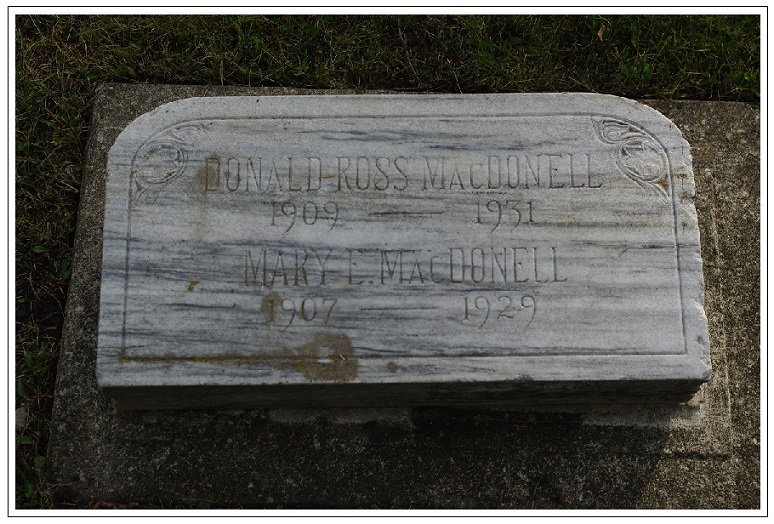
Saint Joachim Cemetery · Edmonton, AB · Section 1 Cimetière Saint-Joachim · Edmonton, AB · Section 1
Constable Donald Ross MacDonell · 1909–1931 · North-West Mounted Police · R.I.P. Gendarme Donald Ross MacDonell · 1909–1931 · Police à Cheval du Nord-Ouest · R.I.P.
This story was composed from elements of Constable MacDonell's obituary, and from the meticulous research of historian and professional friend Jack White, now deceased, whose dedication to preserving the memory of those who served has been an inspiration to all amateur historians of the RCMP. Cette histoire a été composée avec une profonde reconnaissance pour l’avis de décès du gendarme MacDonell, et pour les recherches méticuleuses de l’historien Jack White, aujourd’hui décédé, dont le dévouement à préserver la mémoire de ceux qui ont servi a été une inspiration pour tous les historiens amateurs de la GRC.