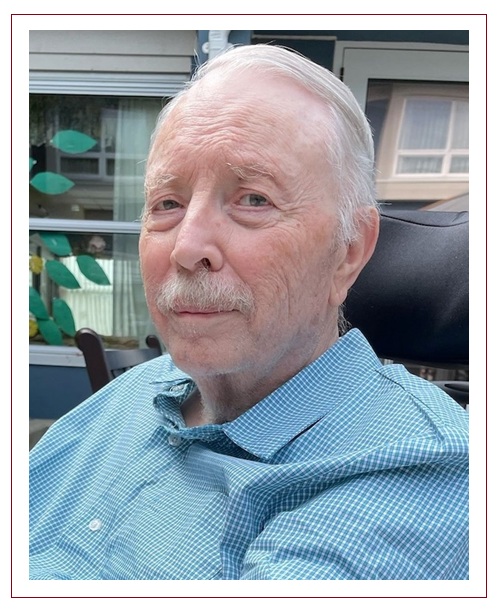
Civilian Member Bryan Cecil Callowhill · C/1039 · RCMP Forensic Laboratories Membre civil Bryan Cecil Callowhill · C/1039 · Laboratoires judiciaires de la GRC
Service FileDossier de Service
- Member No.No. Membre C/1039
- RankGrade Civilian MemberMembre civil
- BornNé October 31, 1946 — St. Thomas, Ontario31 octobre 1946 — St. Thomas, Ontario
- EducationÉtudes B.Sc. Chemistry, University of GuelphB.Sc. Chimie, Université de Guelph
- EngagedEngagé December 29, 197129 décembre 1971
- PostedAffecté RCMP Forensic LaboratoriesLaboratoires judiciaires de la GRC
- RetiredRetraité January 2, 20022 janvier 2002
- ServiceService 30 years30 ans
- SpecialtiesSpécialités Forensic chemistry, paint & physical evidence analysis, breathalyzer, fire investigation, hazmatChimie judiciaire, analyse de peinture et de preuves physiques, alcootest, enquête incendie, matières dangereuses
- Post-retirementPost-retraite Instructor — fire investigation, hazardous materials, emergency responseInstructeur — enquête incendie, matières dangereuses, intervention d’urgence
True and Fascinating Canadian History
Bryan Cecil Callowhill lived a life worth noticing. I never met him — but I admired him. This story is for him.
Bryan was born on Halloween — October 31, 1946 — in St. Thomas, Ontario. His mother must have smiled at the timing. He grew up the eldest son, curious about everything, the kind of boy who joined the science club not because it was cool, but because he genuinely needed to know how things worked.
He earned his chemistry degree at the University of Guelph — working tobacco fields and hay harvests to pay for it — and began his life standing in front of a blackboard. First in St. Thomas, then in Cornwall. He was a good teacher. Patient. Precise. The kind who believed a student’s confusion was never their fault, only an invitation to explain it differently.
But the school and the classroom, eventually, was not enough. On December 29, 1971, he walked into the RCMP Forensic Laboratories as a Civilian Member, and something clicked into place. He would not walk out for thirty years — retiring on January 2, 2002.
The lab was quiet at that hour — the kind of quiet that settles in after everyone else has gone home. Bryan preferred it that way. Thinking required stillness.
He held a fragment of duct tape up to the light, turning it slowly between his fingers. To anyone else it was garbage — sticky, grey, unremarkable. To him it was a sentence waiting to be read. The torn edge had a personality. A fracture pattern. A story.
This was what he had always loved about chemistry — not formulas memorized in school, but the conversation you could have with matter if you learned to listen. Paint transferred in a collision carried the history of two vehicles, two moments, two lives intersecting. A breath pushed into a roadside device carried the quiet confession of choices made. Nothing disappeared. It only waited to be found.
He had driven out to enough roadsides in enough weather to know that the work was rarely glamorous. Cold Saskatchewan mornings. Remote northern airstrips. Courtrooms where he chose his words with the care of a man who understood that precision, in his world, was a form of mercy — to the innocent, and to the truth.
Even after thirty years, retirement did not slow him. He went back to teaching — fire investigation, hazardous materials, emergency response — because some people are simply built to pass things on.
Bryan set the file down, made his note, and reached for the next case.
Some men built things with their hands. He built cases — careful, honest, one fact at a time.
Reporting from Fort Healy,
J. J. Healy
March 24, 2026
Histoire Canadienne Vraie et Fascinante
Bryan Cecil Callowhill a vécu une vie qui méritait d’être remarquée. Je ne l’ai jamais rencontré — mais je l’admirais. Cette histoire est pour lui.
Bryan est né le soir d’Halloween — le 31 octobre 1946 — à St. Thomas, en Ontario. Sa mère a dû sourire à ce timing. Il a grandi comme fils aîné, curieux de tout, le genre de garçon qui rejoignait le club de science non pas parce que c’était cool, mais parce qu’il avait vraiment besoin de savoir comment les choses fonctionnaient.
Il a obtenu son diplôme de chimie à l’Université de Guelph — travaillant dans les champs de tabac et les récoltes de foin pour le financer — et a commencé sa vie debout devant un tableau noir. D’abord à St. Thomas, puis à Cornwall. C’était un bon professeur. Patient. Précis. Le genre qui croyait que la confusion d’un étudiant n’était jamais de sa faute, seulement une invitation à expliquer différemment.
Mais l’école et la salle de classe, finalement, ne suffisaient plus. Le 29 décembre 1971, il est entré dans les Laboratoires judiciaires de la GRC en tant que membre civil, et quelque chose s’est mis en place. Il n’en sortira pas avant trente ans — prenant sa retraite le 2 janvier 2002.
Le laboratoire était silencieux à cette heure — le genre de silence qui s’installe après que tout le monde est rentré chez soi. Bryan préférait cela ainsi. La réflexion exigeait du calme.
Il tenait un fragment de ruban adhésif à la lumière, le tournant lentement entre ses doigts. Pour n’importe qui d’autre, c’était des déchets — collant, gris, sans intérêt. Pour lui, c’était une phrase attendant d’être lue. Le bord déchiré avait une personnalité. Un schéma de fracture. Une histoire.
C’était ce qu’il avait toujours aimé dans la chimie — non pas les formules mémorisées à l’école, mais la conversation que l’on pouvait avoir avec la matière si on apprenait à écouter. La peinture transférée lors d’une collision portait l’histoire de deux véhicules, deux moments, deux vies qui se croisaient. Un souffle dans un appareil routier portait la confession tranquille de choix faits. Rien ne disparaissait. Cela attendait seulement d’être trouvé.
Il avait conduit sur suffisamment de routes par tous les temps pour savoir que le travail était rarement glamour. Matins froids en Saskatchewan. Pistes d’atterrissage isolées dans le nord. Salles d’audience où il choisissait ses mots avec le soin d’un homme qui comprenait que la précision, dans son monde, était une forme de miséricorde — pour les innocents, et pour la vérité.
Même après trente ans, la retraite ne l’a pas ralenti. Il est retourné à l’enseignement — enquête incendie, matières dangereuses, intervention d’urgence — parce que certaines personnes sont simplement faites pour transmettre.
Bryan a posé le dossier, a pris sa note et a tendu la main vers le cas suivant.
Certains hommes construisaient des choses de leurs mains. Lui construisait des dossiers — soigneusement, honnêtement, un fait à la fois.
Rapport depuis Fort Healy,
J. J. Healy
24 mars 2026
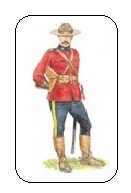
Civilian Member Bryan Cecil Callowhill · C/1039 · RCMP Forensic Laboratories · 1971–2002 Membre civil Bryan Cecil Callowhill · C/1039 · Laboratoires judiciaires de la GRC · 1971–2002