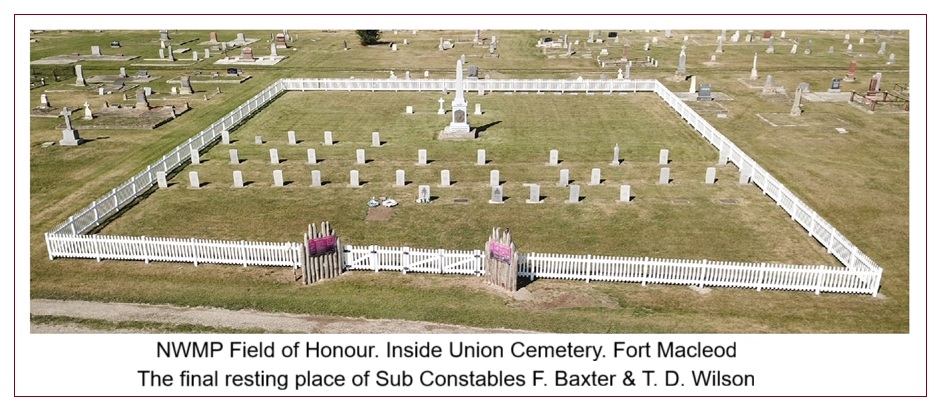
Service File Dossier de service
- Reg. #Matr. # o247
- NameNom Frank Baxter
- RankGrade Sub-Constable · North West Mounted Police (NWMP) Sous-gendarme · Police à cheval du Nord-Ouest (NWMP)
- ServiceService Original 300 · March West, 1874 · Posted Fort Kipp, Alberta Les 300 originaux · Marche vers l’Ouest, 1874 · Poste de Fort Kipp, Alberta
- Also NamedAussi mentionné Sub-Constable T. D. Wilson · Reg.#o228 · Died same incident Sous-gendarme T. D. Wilson · Matr.#o228 · Décédé lors du même incident
- DiedDécédé December 31, 1874 · Prairie blizzard · Between Fort Macleod and Fort Kipp, NWT · Found 5 km off trail 31 décembre 1874 · Blizzard des Prairies · Entre Fort Macleod et Fort Kipp, TNO · Trouvé à 5 km du sentier
- BuriedInhumé Fort Macleod, Alberta Fort Macleod, Alberta
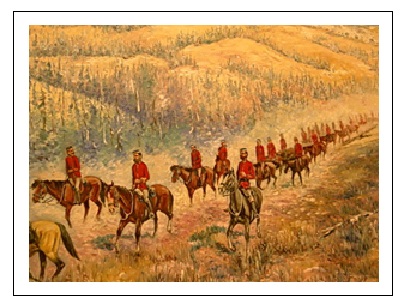
The Canadian prairies in the 1870s were a vast, unforgiving wilderness where winter ruled with deadly authority. Temperatures could plummet to forty below zero or worse, and blizzards materialized with little warning, transforming familiar landscapes into disorienting whiteouts within minutes.
In his book, The North-West Mounted Police: 1873–1885, author Jack F. Dunn described the weather, “Prairie winters are long, often with periods of intense cold once the polar continental air settles over the region. Edmonton has experienced a daily mean temperature below freezing for eighty-four consecutive days. A high temperature of -57°C (-70°F) has been recorded at Prince Albert. On New Year’s Eve in Regina in 1884, Superintendent R. Burton Deane recorded a temperature of -50°C.” (Dunn: 69). In such an unforgiving environment, survival depended on proper winter clothing and boots, equipment and preparation—all of which were in desperately short supply.
The early settlers as well as members of the North West Mounted Police (NWMP) who ventured into the Canadian west were woefully unprepared for such weather extremes. Many lacked adequate cold-weather gear—their wool coats, cloth trousers, and standard-issue boots offered little protection against the bone-shattering cold and wind that could freeze exposed flesh in moments. A journey that seemed routine in autumn could become a fight for survival once winter descended on the land.
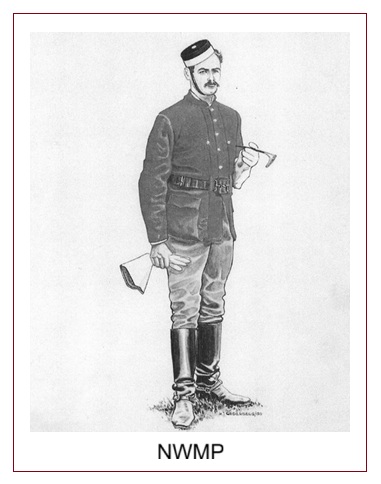
Constable Frank Baxter (Reg. #o247) was among the earliest recruits of the North West Mounted Police. He had endured the legendary March West in 1874 as part of the Original 300-man contingent—a grueling 800-mile trek across the prairies that tested the limits of human endurance. But it wasn’t that historic expedition that would claim his life. Instead, Baxter would fall victim to the prairie winter during what should have been a routine journey.
On December 31, 1874, while Fort Macleod rang in the New Year with celebrations, Baxter and Sub-Constable T. D. Wilson were returning to their posting at Fort Kipp, a small outpost some 25 miles away that occupied a former whiskey trading post. The two men had just completed annual leave at Fort Macleod. Somewhere in that 25-mile expanse of prairie, a winter blizzard overtook them. (Dunn: 160)
The alarm was raised the following morning when a Native youth reported seeing two Indian horses bearing police saddles wandering riderless. A search party led by Captain Ephrem Brisebois, guided by two Indigenous scouts, set out immediately. They found Wilson first—crawling on his hands and knees in a coulee approximately three kilometers from Fort Kipp. He was quickly transported to the post, but the young Mountie died shortly after.
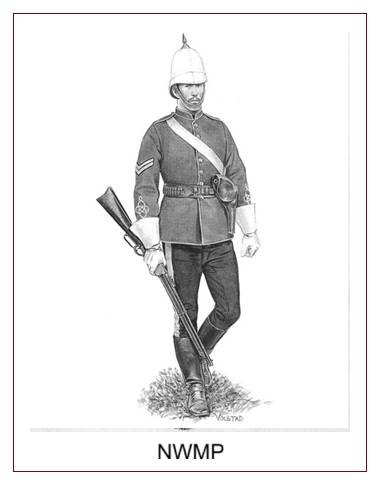
Baxter was not located until the next day. His body lay roughly halfway between Fort Macleod and Fort Kipp, but crucially, five kilometers off the trail. Near him was a rubber bag containing three quarts of whiskey—a grim revelation that explained the purpose of their 50-kilometer round trip. The men who enforced the law against whiskey traders had been carrying whiskey themselves.
When the bodies were transported back to Fort Macleod for burial, the harsh reality of prairie winter presented one final, macabre obstacle. The corpses had frozen in contorted, unwieldy positions and would not fit into standard coffins. The bodies had to be placed in a zinc-lined water trough to thaw before they could be properly interred. (Dunn:160)
This tragedy of the two young NWMP underscores the brutal unpredictability of prairie winters. Despite Frank Baxter’s experience as a March West veteran, despite their training, and despite the relative brevity of their journey, neither man was prepared for the savage cold and disorienting whiteout conditions that could—and did—transform a familiar 25-mile route into a death trap. Wilson’s survival long enough to crawl toward safety, only to die after rescue, and Baxter’s death alone and disoriented, kilometers from the trail, speak to the terrible power of prairie blizzards to kill even experienced frontiersmen.
For the members of the NWMP at Fort Macleod, the New Year’s celebration turned to mourning as they learned the fate of their chums—a stark reminder that on the prairie frontier, death could come swiftly and without warning, even to those who had marched west just a few months before.
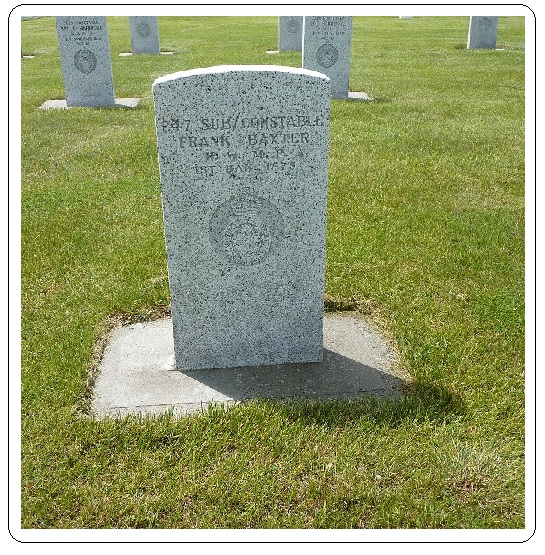
J. J. Healy
October 23rd, 2025
ReferenceRéférence
Dunn, Jack F. (2017). The North-West Mounted Police: 1873–1885. Jack F. Dunn Publisher.
Reg.#o247 · Sub-Constable Frank Baxter · Vet of the Month · October 2025 · rcmpgraves.com Matr.#o247 · Sous-gendarme Frank Baxter · Vétéran du Mois · Octobre 2025 · rcmpgraves.com
↑ Back to Top ↑ Retour en Haut ← Back to Vet of the Month ← Retour au Vétéran du Mois