


True and Fascinating Canadian History

The Mystery of
The Forgotten Inspector
by Historian & Inspector Don Klancher, RCMP (R'td)
In the RCMP, it has been the practice for many years that, when a member of the Force was commissioned, {i.e., promoted to the officer ranks} a new Service Number was assigned. Traditionally the number { which was preceded by the letter O, not the number zero} was always called an Officer Number as opposed to a Regimental Number.
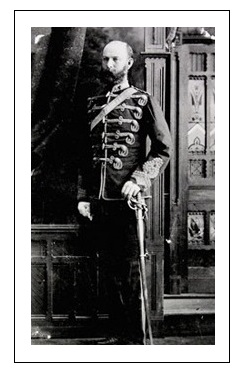
Such was not the case with numbering of officers during much, or all, of the North West Mounted Police {NWMP} era. The Canadian Militia maintained a separate numbering system for their commissioned officers but in the NWMP, the Officers’ establishment was relatively small and as a result, senior administrators apparently deemed the practice unnecessary.
Eventually however, the number of Officers grew. Although the exact date has, so far, been lost to history, it was generally accepted that it was during the early 1900's that a system of consecutive numbers for Officers was introduced. For Officers then in the Force, or officers who had previously served, the number was assigned retroactively.
The numbering system was, for those Officers who joined with a Cmmission, based upon the date of the member’s appointment to the Force or, for those men promoted from the ranks, the date of his promotion to the commissioned ranks. However, that criterion was not followed in a number of cases. One example was Commissioner G. A. French; he was allotted number O.1 when in fact, he was the eleventh officer appointed to the NWMP.
When the Officer Numbers were allotted, four former Officers were overlooked. It has been suggested that it resulted from the incompleteness of early records however, all of the Orders-in-Council covering the Officers’ appointments during the period in question remain intact and there was no doubt they were available at the time the list was first compiled.
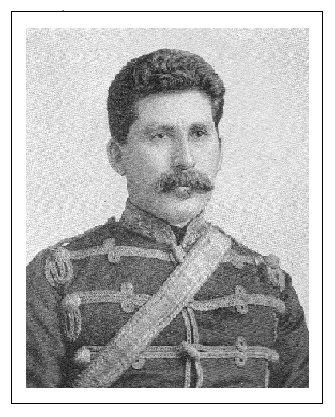
When the errors were discovered, the numbering system was modified. Interestingly, numbers were allotted to only three of the four Officers - Commissioner {Temporary} W. O. Smith, {who should have been O.1}, was assigned O.2 ½; Quartermaster C. Nicolle was assigned O.23½ and Inspector M. H. White-Fraser was assigned O.50 A.
Forgotten, however, was Inspector J. Emile Demers, a former Lieutenant in the 17th Battalion, Canadian Militia. He was, by Order-in-Council of September 18, 1885, appointed an Inspector, effective September 15, 1885. However, subsequent to his appointment, he was found physically unfit for the "arduous duties required of the Mounted Police." As a result, a further Order-in-Council was passed on October 23, 1885, which recommended the appointment be cancelled - which it was.
Had Emile Demers been allotted a number, it undoubtedly would have been O.65½, as the Order-in-Council showed his name between C.F.A. Huot and J.D. Moodie, who were later allotted numbers O.65 and O.66 respectively.
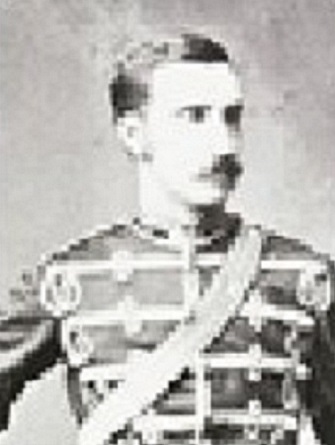
A further discrepancy in the numbering system involved Superintendent J. M. Walsh, one of the first officers appointed to the Force in 1873. In 1883, he resigned his Commission but fourteen years later, he was reinstated as a Superintendent. For his first term of service he was allotted number O.7 however, for reasons which remained a mystery, for his second term he was allotted number O.109.
As previously noted, for those Officers who joined with a Commission, the Officer Number was based upon the date of appointment to the Force or, for those men promoted from the ranks, the date of promotion to the commissioned ranks. If two or more members were promoted on the same date, the Officer Numbers were assigned by seniority -the lowest number assigned to the senior member.
In 1998, the policy changed and the member, once commissioned, retained his or her original Regimental Number. Officer Number 1849 was the last number allotted.
However, that policy was relatively short-lived and the Officer Number system was re-adopted in, as near as could be determined, November 2005. Officer Numbers were then allotted, retroactively, to those officers who had been commissioned in the interim.
When the Officer Numbers were examined, the growth of the Force was very evident. The Officer Number allotted at the beginning of 1973, the centennial year of the Force, was O.787 however, during the following 35 years, some 1700 Officer Numbers were allotted.
When one thinks of history experts -- say, the NWMP, RNWMP and the RCMP, the name Don Klancher comes at the top of the list.
Don's knowledge of RCMP history is equivalent to a multi-GB search engine. He has written several books, as well as numerous articles, on various aspects of Force history. There's no further need for 'Google' after Don Klancher has shared his stories about the Force.
Don has been a major contributor to the Graves Database and I am honoured that he would provide me with the 'Mystery of the Forgotten Inspector'.
I do believe that we've just had another lesson in Canadian history.